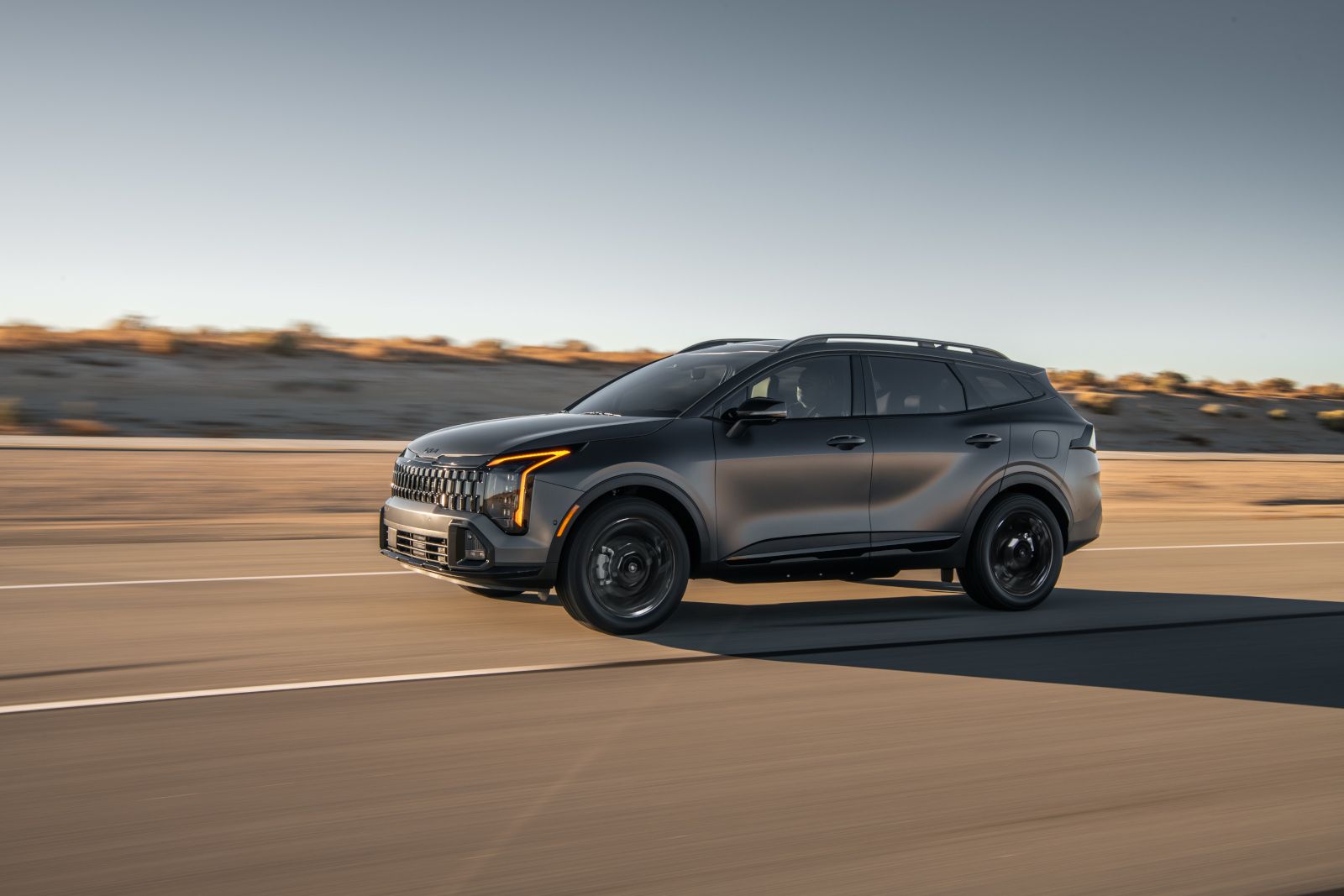
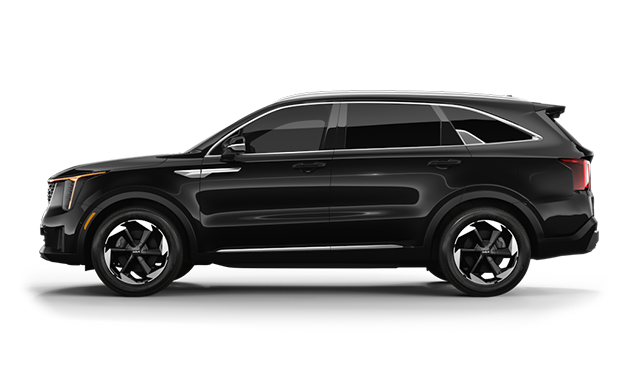
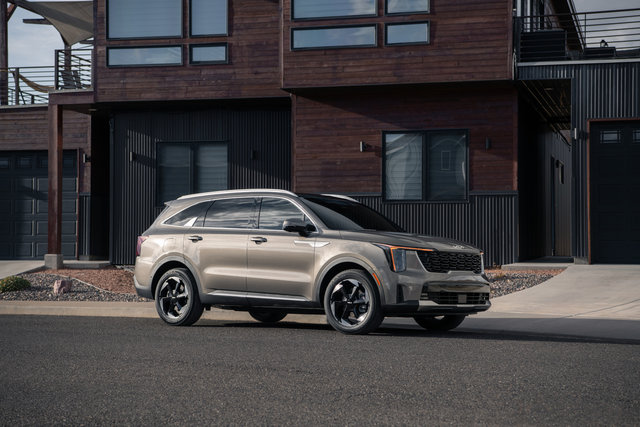
Both the 2026 Kia Sorento and the 2026 Kia Sportage offer plug-in hybrid powertrains — and on the spec sheet, they share more than you might expect. The same 268 hp combined output. The same AWD standard. The same NACS-compatible charging ecosystem. But the two vehicles are built around different use cases, and for buyers with a tighter driveway or a smaller garage in Bolton or across Ontario, the differences in footprint, seating, and daily practicality add up quickly.
This comparison breaks down what each PHEV actually delivers, so you can make a clear choice based on how your household actually works — not just which number looks bigger on paper.
At a Glance: 2026 Sorento PHEV vs. 2026 Sportage PHEV
|
Specification
|
2026 Sorento PHEV
|
2026 Sportage PHEV
|
|
Powertrain
|
1.6L Turbo PHEV + permanent magnet motor
|
1.6L Turbo PHEV + permanent magnet motor
|
|
Combined horsepower
|
268 hp
|
268 hp
|
|
Combined torque
|
270 lb-ft
|
271 lb-ft
|
|
Transmission
|
6-speed automatic
|
6-speed automatic
|
|
Drive type
|
AWD standard
|
AWD standard
|
|
All-electric range
|
55 km
|
53 km
|
|
Rows of seating
|
3 rows (6 passengers)
|
2 rows (5 passengers)
|
|
Cargo behind 2nd row
|
1,090–1,274 L
|
977 L
|
|
Cargo behind 1st row
|
2,139 L
|
1,855 L
|
|
Battery
|
360V / 88 kWh discharge
|
360V / 88 kWh discharge
|
|
Towing capacity
|
2,000 lbs (907 kg)
|
2,000 lbs (907 kg)
|
Performance and Efficiency: A Shared Foundation
The Sorento PHEV and Sportage PHEV are built on the same fundamental powertrain architecture: a 1.6-litre turbocharged four-cylinder GDI engine paired with a permanent magnet synchronous electric motor, a 6-speed automatic transmission, and a 360V lithium-ion polymer battery rated at 88 kWh discharge capacity. Both deliver 268 hp combined, and both are AWD standard — there's no FWD option in either PHEV lineup.
Where they differ is in electric range: the Sorento PHEV offers an estimated 55 km of all-electric range, while the Sportage PHEV delivers an estimated 53 km. For daily use in Bolton and the surrounding Peel Region, both cover the average round-trip commute on electricity alone. The distinction is narrow enough that it shouldn't drive the decision — the choice between these two comes down to physical size and seating requirements.
Shared Powertrain Highlights:
- 268 hp combined output on both models
- AWD standard across both lineups
- 360V / 88 kWh discharge battery on both
- 6-speed automatic transmission on both
- Towing: 2,000 lbs (907 kg) on both
Interior Space and Seating: Where the Gap Opens Up
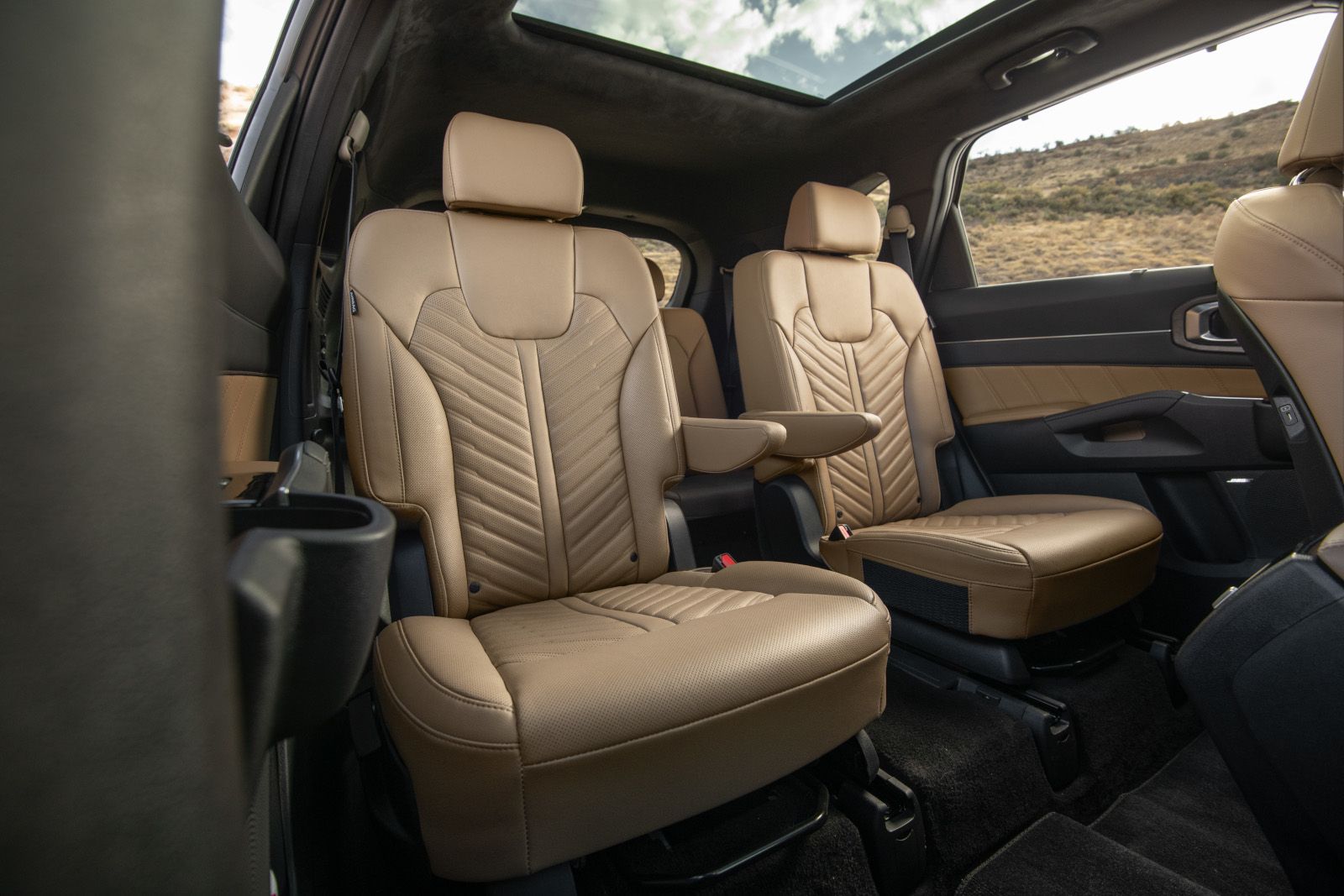
The Sorento PHEV seats 6 passengers across three rows. The Sportage PHEV seats 5 passengers across two rows. For a household that needs to move more than four people with any regularity — a family with three kids, an older parent traveling along, or regular carpooling — the Sorento PHEV's third row provides that capacity in a PHEV format that doesn't require moving up to a full-size vehicle.
For a two-adult household or a family of four, the Sportage PHEV's more compact two-row layout works well without the added bulk of a third row. Cargo behind the second row is 977 L in the Sportage PHEV, compared to 1,090–1,274 L in the Sorento PHEV (the Sorento's range reflects sliding second-row positioning). Both vehicles offer a dual-level cargo floor on select configurations for flexible loading.
The Sportage PHEV also lacks the dual-level cargo floor on PHEV models, while HEV variants of the Sportage include it. Worth confirming with the Bolton Kia team which specific Sportage PHEV trim configuration suits your needs.
Footprint: The Garage Question
The Sorento PHEV is a mid-size SUV — larger in every direction than the Sportage. If your garage or driveway has a defined width constraint, or if tight urban parking in the Bolton area is a regular part of your routine, the Sportage PHEV's more compact footprint gives you a meaningful advantage in day-to-day manoeuvrability.
For drivers whose primary concern is fitting into a standard two-car garage comfortably alongside another vehicle, the Sportage PHEV is the easier fit. If garage space isn't a limiting factor, the Sorento PHEV's added interior volume and third-row seating make it the more practical choice for larger households.
Technology and Features
Both vehicles share the same core technology baseline across most trims. Dual-zone automatic climate control, wireless Apple CarPlay and Android Auto, Smart Cruise Control with Stop and Go, and Kia Connect with over-the-air updates are confirmed across their respective LX entry trims. Higher trims on both models add the available Bose premium audio system, Digital Key, Surround View Monitor, Highway Drive Assist 2, and a heads-up display on select configurations.
The Sorento PHEV's SX trim adds a full-display digital rear-view mirror, Bose audio, and a 12.3-inch instrument cluster — features that sit at the top of the Sorento PHEV lineup. The Sportage PHEV lineup also steps up through similar tier logic, with available HUD and premium audio features at the higher trims.
Which PHEV Fits Your Situation?
The Sorento PHEV wins when: you have three or more regular passengers, you prioritize cargo capacity, or the third row provides a practical backup you'd use multiple times per year. It's the PHEV for households that have outgrown the compact segment but don't want a full-size SUV.
The Sportage PHEV wins when: your household is two to four people and garage or parking footprint matters. The near-identical powertrain, similar electric range, and AWD capability mean you don't give anything away in the drive — just in size.
Book a Test Drive at Bolton Kia
Both PHEVs are available now at Bolton Kia. The team can walk you through trim-specific differences, confirm which configuration fits your driveway, and arrange a back-to-back test drive so you can feel the size difference on local roads. Reach out or stop by our Bolton showroom to get started.
To learn more about the 2026 Kia Sorento PHEV, visit Kia.ca