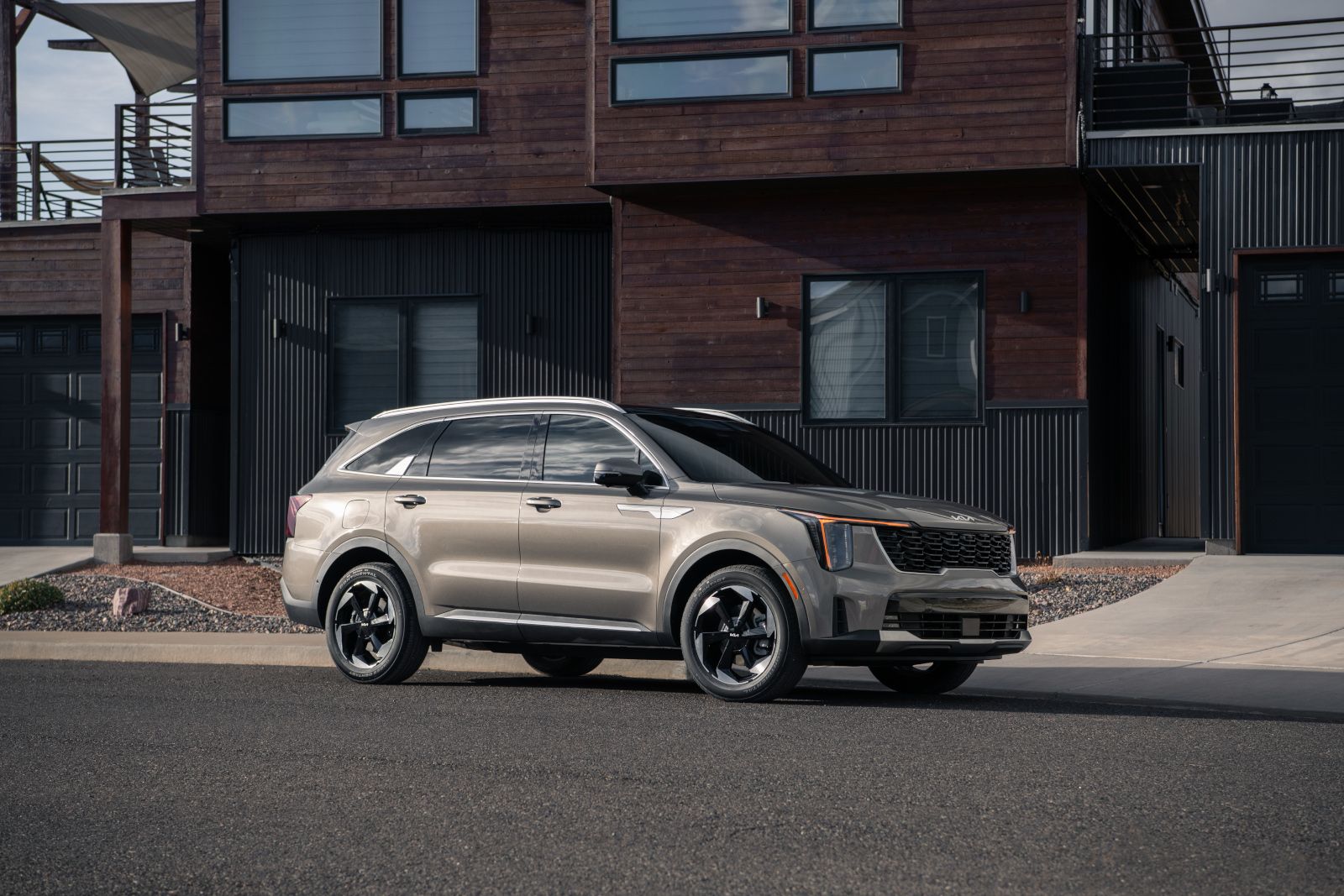
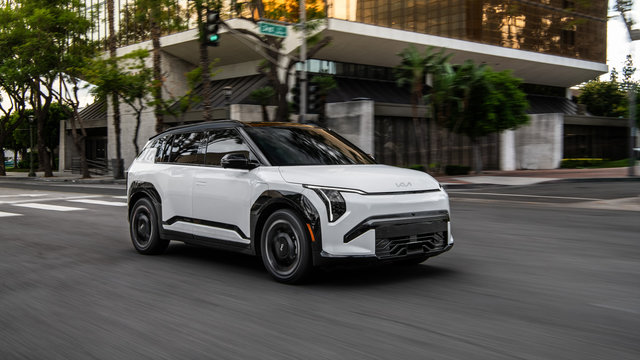
Every red light, every school pickup line, every slow crawl on a suburban arterial road is a moment most drivers write off as wasted. In the 2026 Sorento PHEV, that moment does something useful: it feeds the battery.
For Ontario families splitting time between commuting, errands, and weekend trips, that small shift adds up to fewer visits to the pump without changing how or where you drive.
What Regenerative Braking Is on the Sorento PHEV
Regenerative braking is part of the Sorento PHEV’s plug-in hybrid system, which pairs a 1.6L turbocharged four-cylinder engine with a permanent magnet synchronous motor for a combined 268 hp and 270 lb-ft of torque. Instead of only using friction brakes to slow down, the system uses the electric motor to capture energy that would otherwise be lost as heat.
That energy goes back into the 88 kWh lithium-ion polymer battery, which also stores charge from a home Level 2 connection in about 3.8 hours. It is one part of a system built to run on regular unleaded, not a standalone gadget.
How It Works in Real Driving
When you lift off the accelerator or press the brake pedal, the electric motor switches roles and acts as a generator. It slows the SUV down while sending recovered energy back to the battery, supplementing the electricity already banked from plug-in charging.
This happens continuously and requires no input from the driver. There is no button to press or mode to select; the Sorento PHEV manages it automatically as part of normal driving, whether you notice it or not.
The effect is most noticeable in stop-and-go traffic, on suburban routes with frequent stop signs, and during short trips where the vehicle spends more time decelerating than cruising at a steady highway speed.
Why It Matters for Fuel Stops and Range
The practical payoff is straightforward: recovered energy extends how far you can drive on the battery alone before the gasoline engine needs to contribute. The Sorento PHEV is rated for up to 55 km of all-electric range, and regenerative braking helps stretch what’s left of that range between charges.
For a household doing school runs, grocery trips, and short commutes, much of that daily driving can stay inside the electric range, especially with a charge topped up overnight. When the engine does take over, the PHEV is rated at 6.9 L/100 km combined on gasoline alone, or 2.8 Le/100 km combined when factoring in electric driving.
The result isn’t about avoiding the pump entirely. It’s about needing it less often, without adjusting your route or your routine to make that happen.
|
Sorento PHEV Spec
|
Value
|
|
All-electric range
|
55 km
|
|
Combined fuel economy (gas)
|
6.9 L/100 km
|
|
Combined (gas + electric)
|
2.8 Le/100 km
|
|
Level 2 charge time
|
3.8 hours
|
|
Battery
|
88 kWh, lithium-ion polymer
|
|
Drivetrain
|
AWD
|
Who Benefits Most From This System
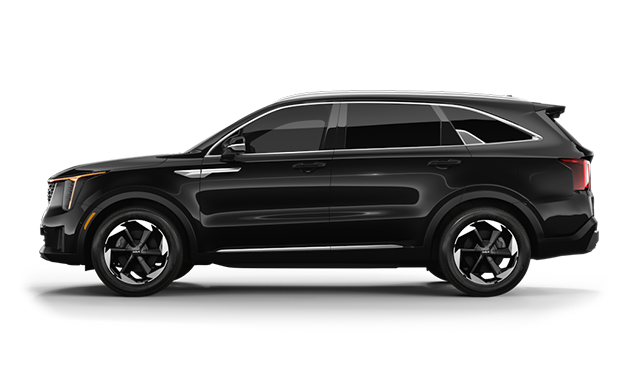
The Sorento PHEV is built as a 6-passenger, 3-row SUV, not a small commuter car, so the case for regenerative braking looks different than it would in a compact hatchback. Families still need the cargo room and towing capacity that come with a 3-row layout.
Behind the third row, there’s 357 L of cargo space; fold it down and that grows to 1,274 L, or 2,138 L with both rear rows folded. Max towing sits at 2,000 lbs (907 kg), enough for light trailers without turning the Sorento PHEV into a dedicated tow rig.
Drivers who spend a lot of time in stop-and-go traffic, on suburban roads with frequent braking, or running short trips around town will feel the biggest benefit, since those conditions generate the most opportunities to recover energy. Highway-heavy driving, with fewer stops, sees less of an effect from regenerative braking specifically, though the plug-in system still contributes through electric-only driving.
That makes the Sorento PHEV a fit for commuters who charge at home overnight, school-run households doing frequent short trips, and efficiency-minded buyers who still need three rows and AWD. The regenerative braking system is one reason to shortlist it, alongside the electric range, the AWD layout, and the flexibility of running on regular fuel when a longer trip calls for it.
Test Driving the Sorento PHEV at Bolton Kia
The Sorento PHEV combines a 55 km electric range, AWD, and 6-passenger, 3-row seating with a braking system that quietly supports fewer fuel stops during everyday Ontario driving. It’s built for households that split time between home charging and longer trips on the highway.
Visit Bolton Kia in Bolton to test drive the Sorento PHEV on local traffic and stop-and-go routes, and talk through how it fits your commuting and family driving needs with our team.
To learn more about the 2026 Kia Sorento PHEV, visit Kia.ca